
Home / Programs & Services / Invertebrates / Mites
Mites
Mites are a type of arachnid and are closely related to ticks and spiders. This diverse group of arthropods is very small, oftentimes microscopic in size. Mites can be scavengers, predators, or parasites of plants, insects, or other animals. Some species can transmit disease, damage agricultural crops, or cause dermatitis and allergies in humans. Most mites, however, go undetected and have no direct effect on humans. Biting mites may cause irritation and itchy swelling at the bite site and most only bite humans when their normal host is unavailable.

Vector Significance
The mite species listed here are not known to spread disease but can cause anxiety, intense itching and dermatitis.
Vector Control Services
- Provide identification of suspected mite specimens and other insect/pest specimens
- Provide inspections of properties to check for rodent, bird, or other mite-related activity
- Provide residents guidance on correct rodent-proofing of the home/structure and inform them what pest control services may be necessary
- Specimens can be dropped off at the Alameda County Environmental Health Department front desk at 1131 Harbor Bay Parkway, Alameda
Requesting Services
If you are interested in our services and want to request inspection, click the button below:
What can the public do?
- Since mite control can be time-consuming and challenging, it is best to focus efforts on controlling the mite’s natural host such as rodents or birds
- For a rodent mite infestation, rodent-proofing the home and eliminating all rats is necessary.
- Pesticide treatments may help prevent further bites from occurring but should be used in combination with rodent control and exclusion.
Mites
Types of Mites
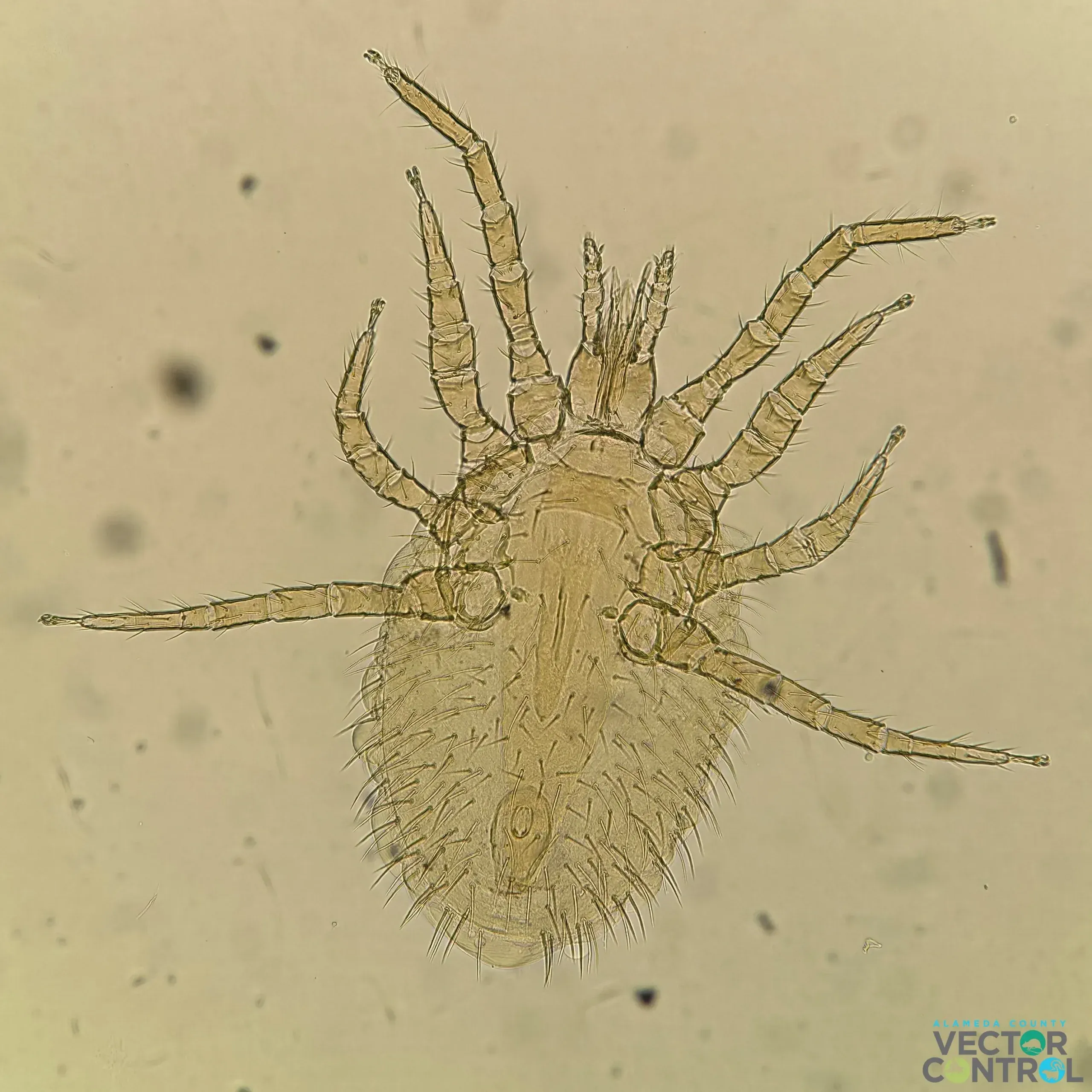
Tropical Rat Mite (Ornithonyssus bacoti)
- The tropical rat mite is the most reported biting mite in Alameda County
- These mites are small and difficult to see with the naked eye
- The natural host for this mite is primarily the roof rat (Rattus rattus)
- Rat mites are typically found in and around the nests of roof rats
- When a rat dies or leaves the nest, these mites will scatter in search of their next blood meal
- While this species cannot survive long term without feeding on a rodent, it can survive for up to two months after the rodents are gone
- Eliminating all rodents from the premises is the only way to eliminate all the mites
Northern Fowl Mite (Ornithonyssus sylviarum)
- These mites live on domestic and wild birds
- They are most likely to come inside your home or office after a bird has been nesting in or on a structure, and the birds have either died or left the nest
- Removal of the abandoned nest in a timely manner should help prevent their spread
Chicken Mite (Dermanyssus gallinae)
- Chicken mites are primarily parasites of chickens but can also be found on other birds
- They are often found in chicken coops and may survive up to 10 months without a blood meal
- Treatments are available for pet chickens, please consult with your veterinarian
Straw/Grain Itch Mite (Pyemotes tritici)
- Itch mites are extremely small and can usually be found in and around hay and stored grains
- These mites are parasites of moth and beetle larvae that feed on hay or grains
- Finding and discarding the infested product will eliminate the infestation
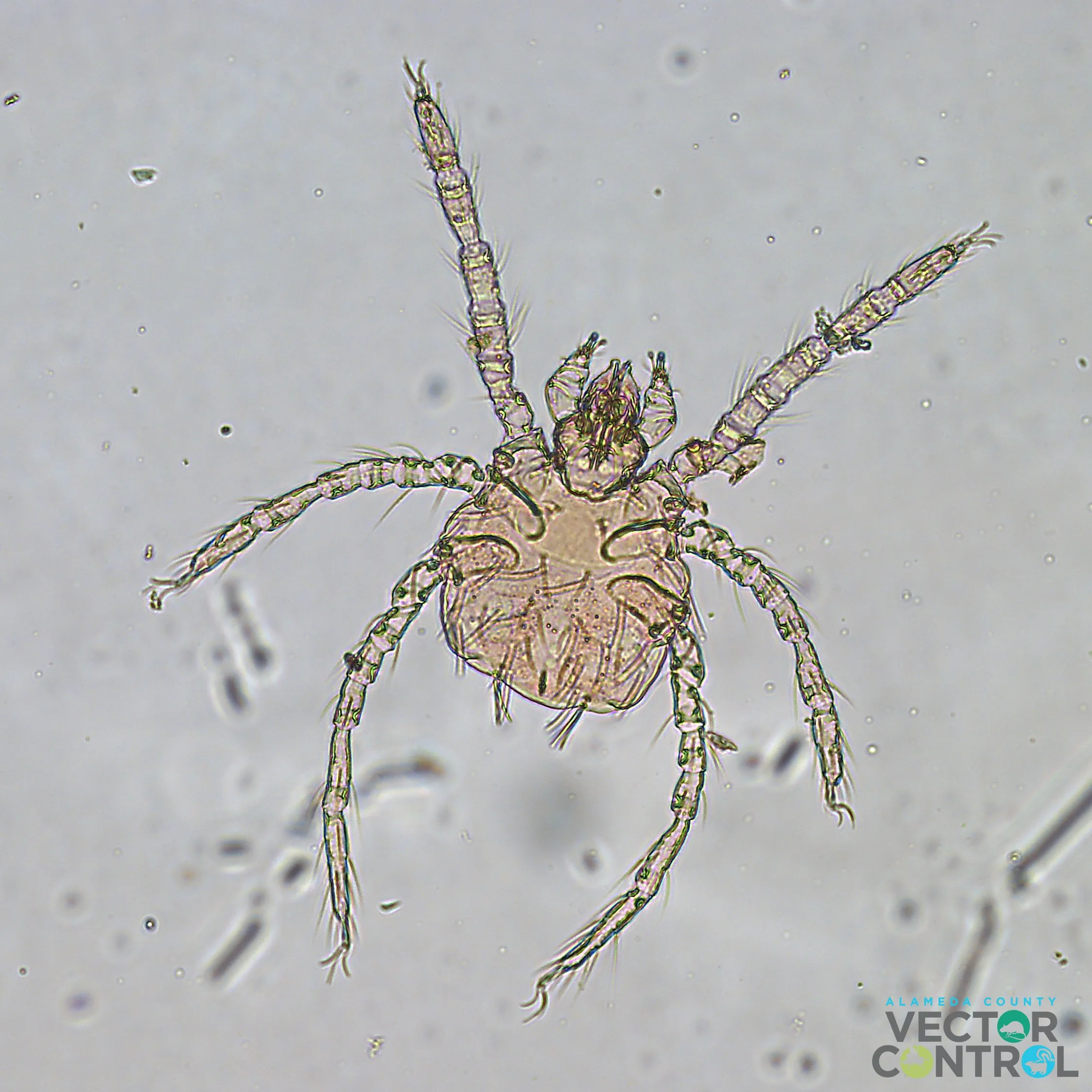
Chiggers (Trombiculid spp)
- Chiggers are natural parasites of lizards, birds, and small mammals
- These mites are very small and only the larval stage bites humans
- Bites cause intense itching and appear after several hours
- Shower as soon as possible after visiting an area that may have chiggers. In addition, repellents, such as permethrin treated clothes, and DEET on exposed skin may offer protection