Home / Programs & Services / Invertebrates / Fleas
Fleas
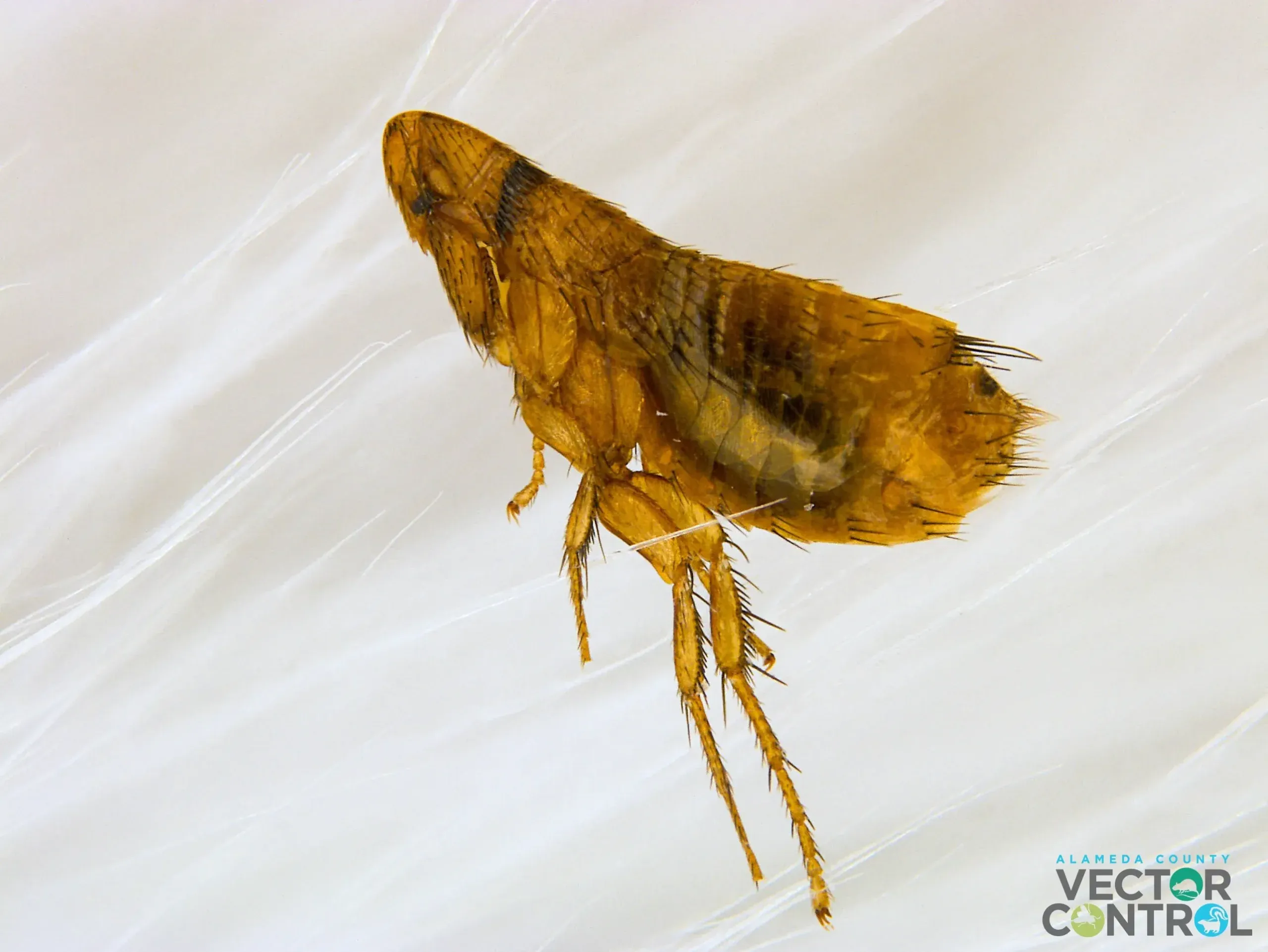
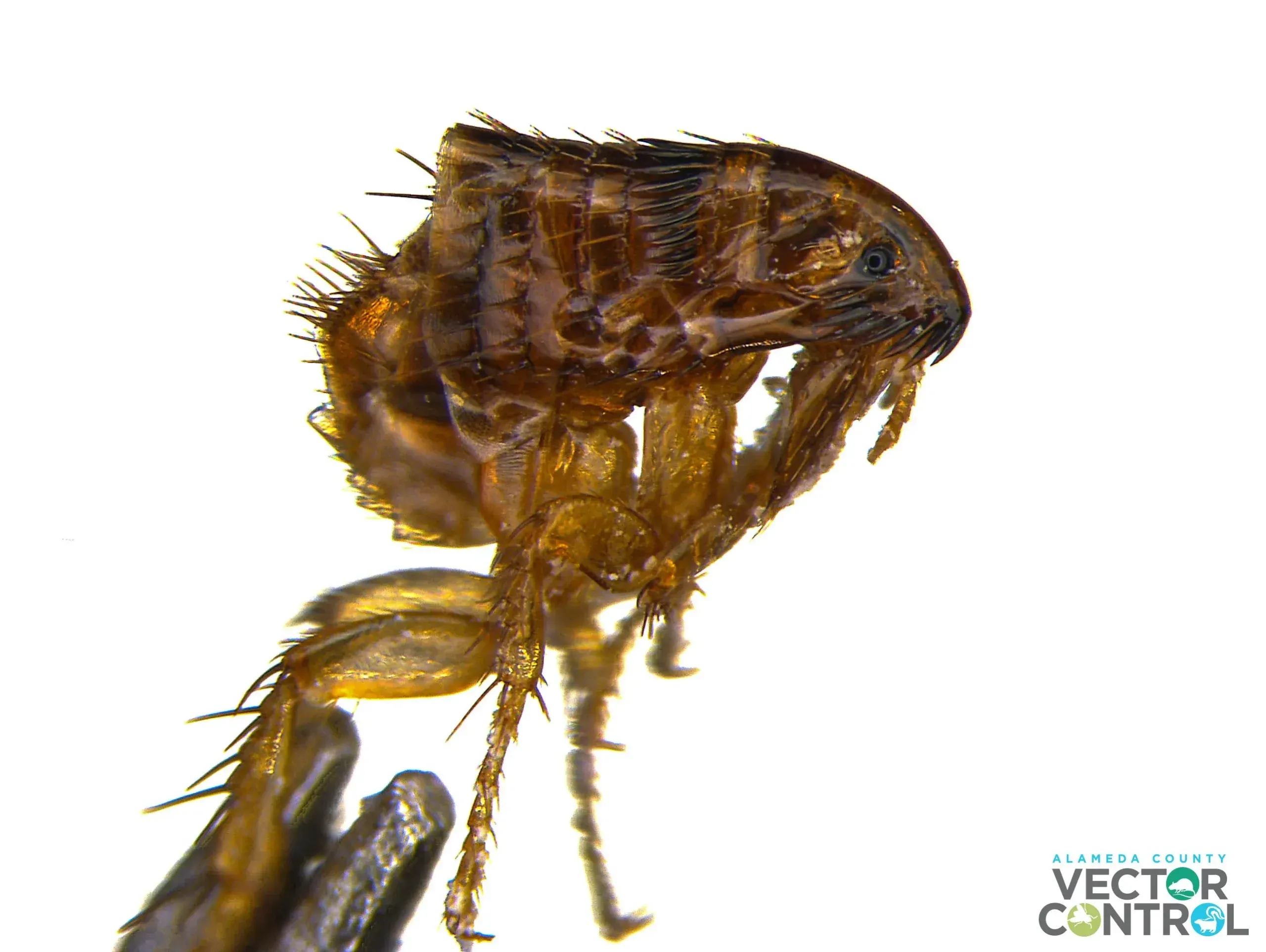
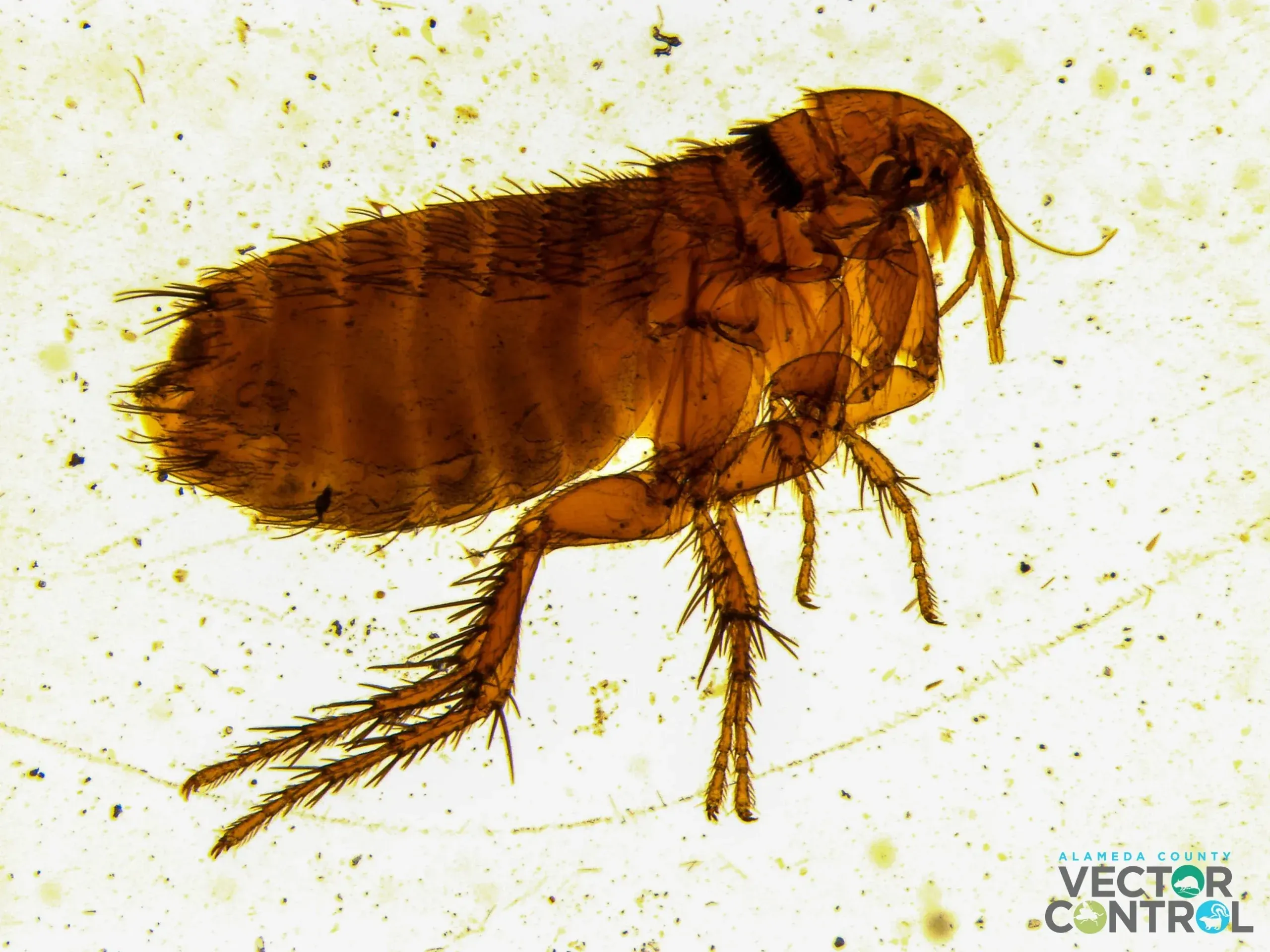
Fleas are small (1/10th -1/8th inch), vertically flattened insects that infest and move about the hairs of warm-blooded animals. They are wingless and cannot fly, but they have spring-like legs that allow them to jump long distances relative to their body size.
- Fleas feed on the blood of dogs, cats, and other warm-blooded animals including humans. However, most flea species prefer specific non-human hosts
- The cat flea, Ctenocephalides felis, is the most common flea found in homes and feeds primarily on cats, dogs, raccoons and opossums
- Another flea, Pulex simulans, prefers skunks and other wildlife, but will readily feed on humans and can also invade homes

Vector Significance
Certain types of fleas, including the Cat flea and Oriental rat flea, have the potential to transmit diseases after feeding on infected hosts or when infected flea feces are scratched into a wound. These diseases and conditions include:
- Plague
- Tularemia
- Murine typhus
- Tapeworm infections
- Allergic dermatitis in humans and pets
While fleas are common in Alameda County, flea-borne diseases are very rare.
Vector Control Services
Vector Control can:
- Provide inspections of properties (homes, schools, commercial) to confirm presence of fleas or other biting insects
- Identify species of fleas and potential harborage for fleas and flea-carrying animals
- Determine whether wildlife is currently living on the property
- Assist with eviction of wildlife living under or within a structure
- Provide recommendations regarding flea infestations and nuisance wildlife
Requesting Services
If you are interested in our services and want to request inspection, click the button below:
What can the public do?
For indoor infestations:
- Check household pets for excessive scratching or biting, and the presence of fleas in fur
- Manage fleas on household pets with veterinarian recommended flea control
- Thoroughly and regularly clean pet areas indoors and outdoors
- Frequent vacuuming indoors
For outdoor infestations:
- Pesticide treatments on outdoor shaded areas where pets rest can be effective
- Reduce moisture and increase sunlight into the yard to “dry out” fleas
- Check that wildlife (including feral cats) are not living on the property
Fleas